
Teaching Greetings: My First English Class with Young Learners this school year.
There's a moment every teacher remembers — the first time you stand in front of a full classroom, marker in hand, and realize the words on the board are about to change how a group of children see the world. For me, that moment happens every first class of the new academic year a small classroom in Laos, teaching Greetings Vocabulary to a room of young students.
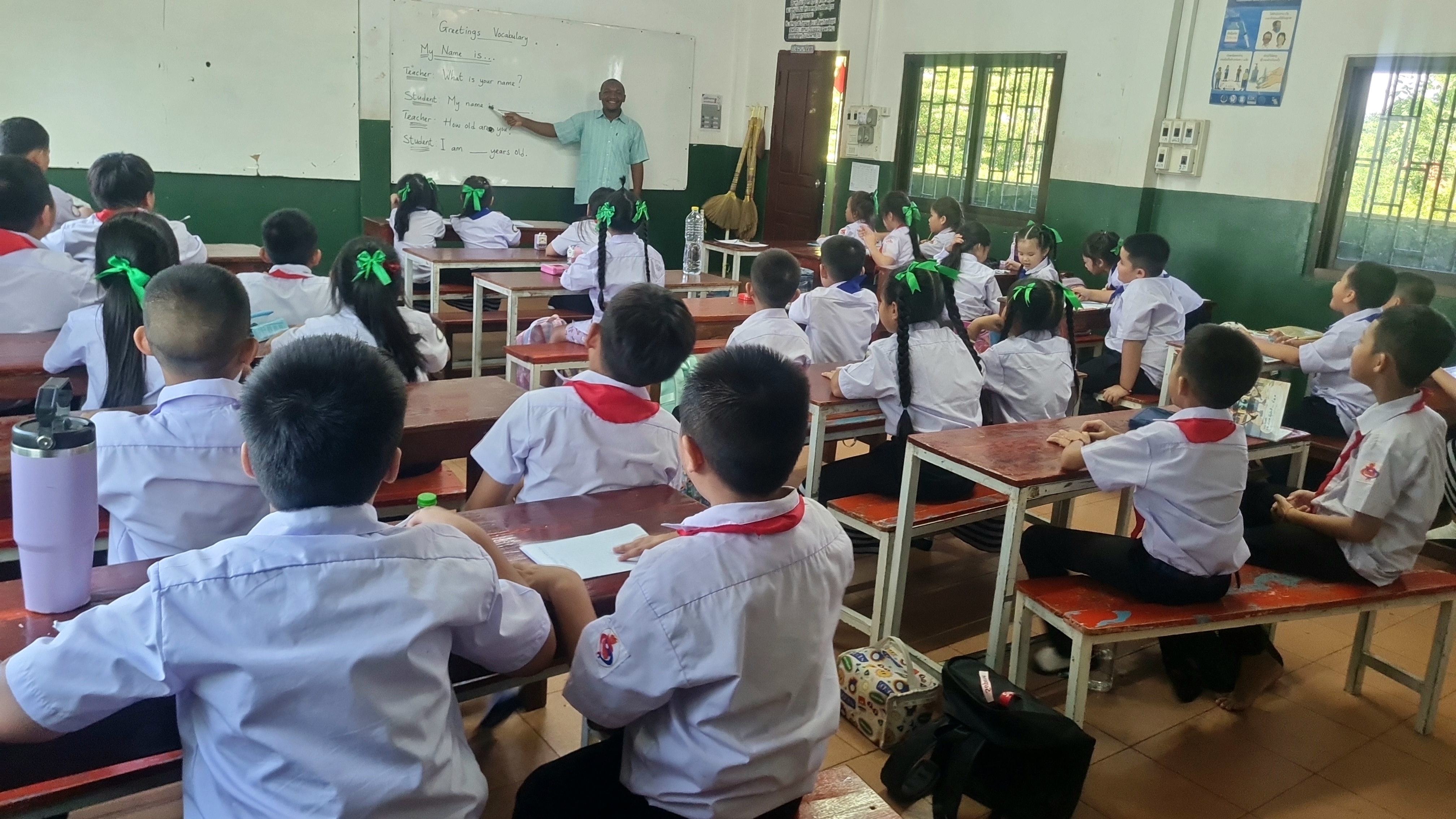
The lesson was simple on paper: My Name Is. I wrote out the basic exchange on the whiteboard — Teacher: What is your name? Student: My name is ___. Teacher: How old are you? Student: I am ___ years old. Simple sentences that most of us take for granted. But watching a room full of children reminded me just how powerful a first greeting really is.
The classroom itself told its own story. Wooden desks packed close together, green ribbons tied neatly in the girls' hair, red scarves around several of the boys' necks, sunlight pouring in through the barred windows at the back of the room. Every student sat facing forward, notebooks and water bottles scattered across their desks, full attention locked on the board as I pointed to each line and worked through the pronunciation slowly, one word at a time.
Teaching greetings might sound basic, but it's actually one of the most important lessons you can give a new language learner. "Hello, my name is..." isn't just vocabulary — it's a tool. It's the first sentence that lets a child step outside their own language and connect with someone new. Watching them repeat the words back, some shy, some confident, some giggling at the unfamiliar sounds in their mouths, was a reminder of why this kind of teaching matters so much.
What struck me most was how present they all were. No phones, no distractions — just a room full of curious young minds trying out new sounds. Every "my name is" and "I am ___ years old" they practiced that day was a small step toward a much bigger world opening up for them.
I've taught in a few classrooms since first landing in Asia, but this one stays with me. Not because the lesson was complicated, but because it wasn't.
Sometimes the most meaningful teaching happens in the simplest moments — a whiteboard, a few new words, and a room full of children willing to try.